Quick facts
- Scientific name
- Haematopus palliatus
- Conservation status
- Least concern
- Habitat
- Strictly coastal, in areas with sand beaches
Appearance
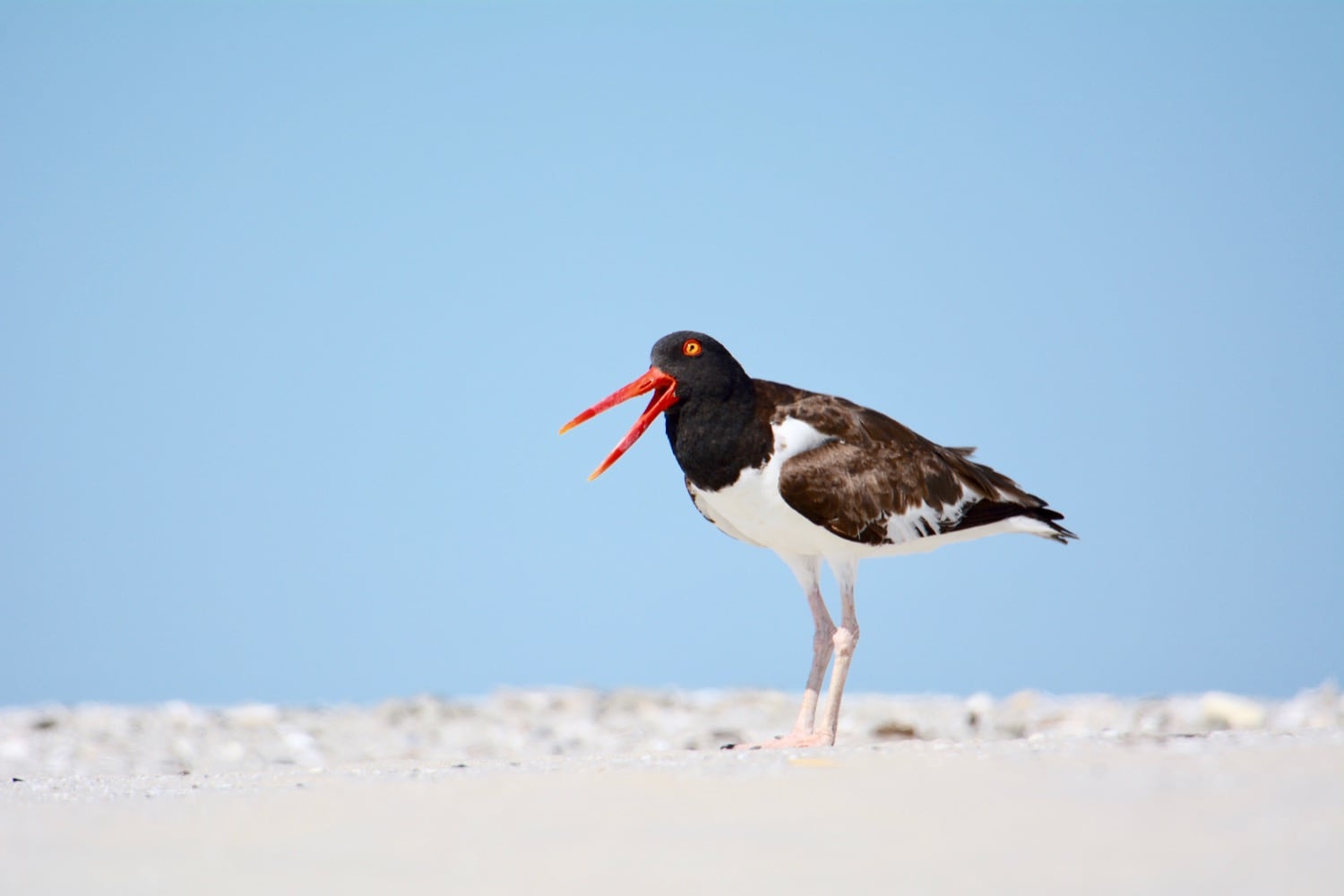
American oystercatchers are large shorebirds found on beaches along the Atlantic Ocean. They have yellow eyes, a bright orange bill, and nearly-black head, with dark brown wings and a white underside.
Behavior and diet
These birds almost solely eat shellfish, including clams, oysters, and molluscs, and therefore can only live in a narrow area that is able to support these food sources. Oystercatchers are one of the few birds able to open shellfish with their beak, but sometimes get their beaks stuck when the shell clamps shut.
Nesting and breeding
Oystercatchers first start breeding at three to four years of age and may sometimes mate for life. The birds usually nest on sand dunes or marshes near the water, dug into the ground and lined with stones.
Habitat and distribution
American oystercatchers live along the eastern coast of North America, ranging from Maine all the way down to northern Mexico. They are found south of New York state all year round, and found to the north (Connecticut, Rhode Island, and Massachusetts) during breeding season.
Further reading
This page contains information from Audubon Field Guide and the Cornell Lab of Ornithology. You can find more information about American oystercatchers on their websites